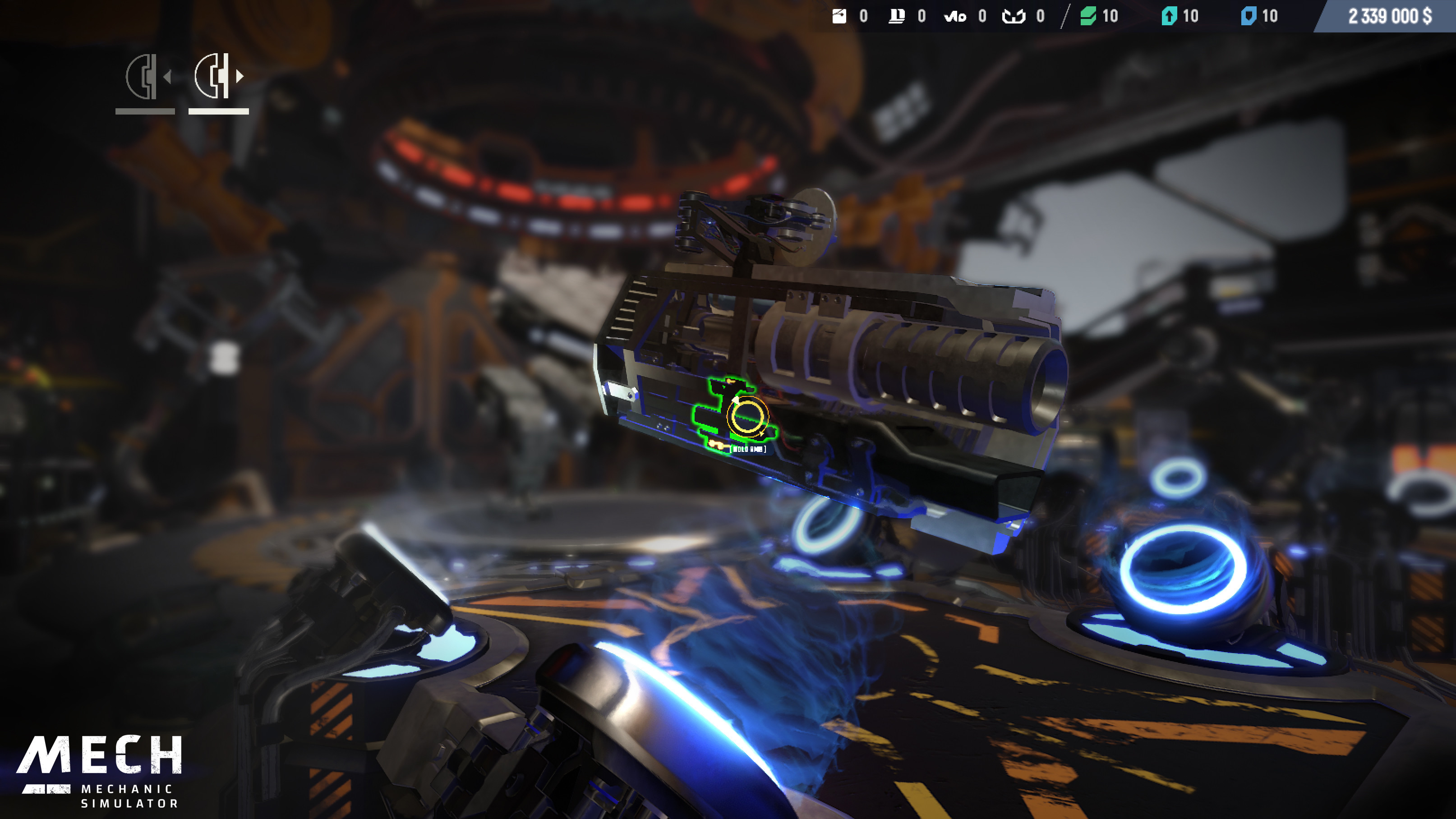
What do stock trading, logic equations, and mini-games based on 30 year old puzzle games have to do with repairing giant robots? A lot, apparently. It certainly makes for an interesting combination of elements forming together like a bit of a hap-hazard Voltron. Seems appropriate for a game about repairing mechs, anyway.
Ok, so I know I just threw a lot of crazy images together, but I’ll try to make sense of it all.
Let’s just start with the core game:
It is a mechanic simulator at its base. There are many, many games of this type, and a good portion come from its publisher and their “friends.” I put “friends” in quotes, because it seems like a number of these Chinese publishers have an invested interest in each other, especially considering I even got a loyalty discount for owning other games. Some of you may be familiar with PlayWay as a publisher. Their history of mechanic and repair simulators is long and storied.
PlayWay’s two best-selling games. They like their mechanic sims.
If you’ve never played one, it’s fairly self explanatory. You are a mechanic, and your job is to fix things. So in Car Mechanic Simulator you fix cars, in Mech Mechanic Simulator you fix mechs. I think you probably get it at this point.
The basic gameplay loop is as it sounds: pick up an order to repair a mech, complete the tasks required, send it back, get paid, repeat. Fixing and replacing parts is pretty straightforward: use the scanner to diagnose the problem, pull a limb off the suit, put it on a table and begin stripping it down. Like other mechanic simulator games, there are various stations to be unlocked and upgraded which allow you to repair, clean and craft individual components. So you can remove rust, weld, fix electronics and apply a fresh coat of paint… basically all the things you would expect from a game like this.
So far so… the same as every other game like this, right?
Click the shiny thing. Take it out. Put in a new one. Ezpz.
Wrong.
It seems like it’s going to be like most other mechanic games until after the first few hours, and you start unlocking stations that aren’t at all similar to other games in this genre.
For example, there is a functioning mini-stock market, featuring rising and falling values of the companies whose mechs you service. As you support the company, its stock grows, and so does your income. If you own stock in a company, and complete a contract from that company, you get extra compensation for the job, so it’s worth buying at least a few shares to boost your income.
I guess it seems kinda appropriate after the whole GameStonks fiasco.
While some of the cleaning and repair stations are fairly typical; cleaning off rust, and welding broking parts as one might expect. But the electronics station has you play a minigame to repair components that reminds me a lot of the classic puzzle game, Pipedream.
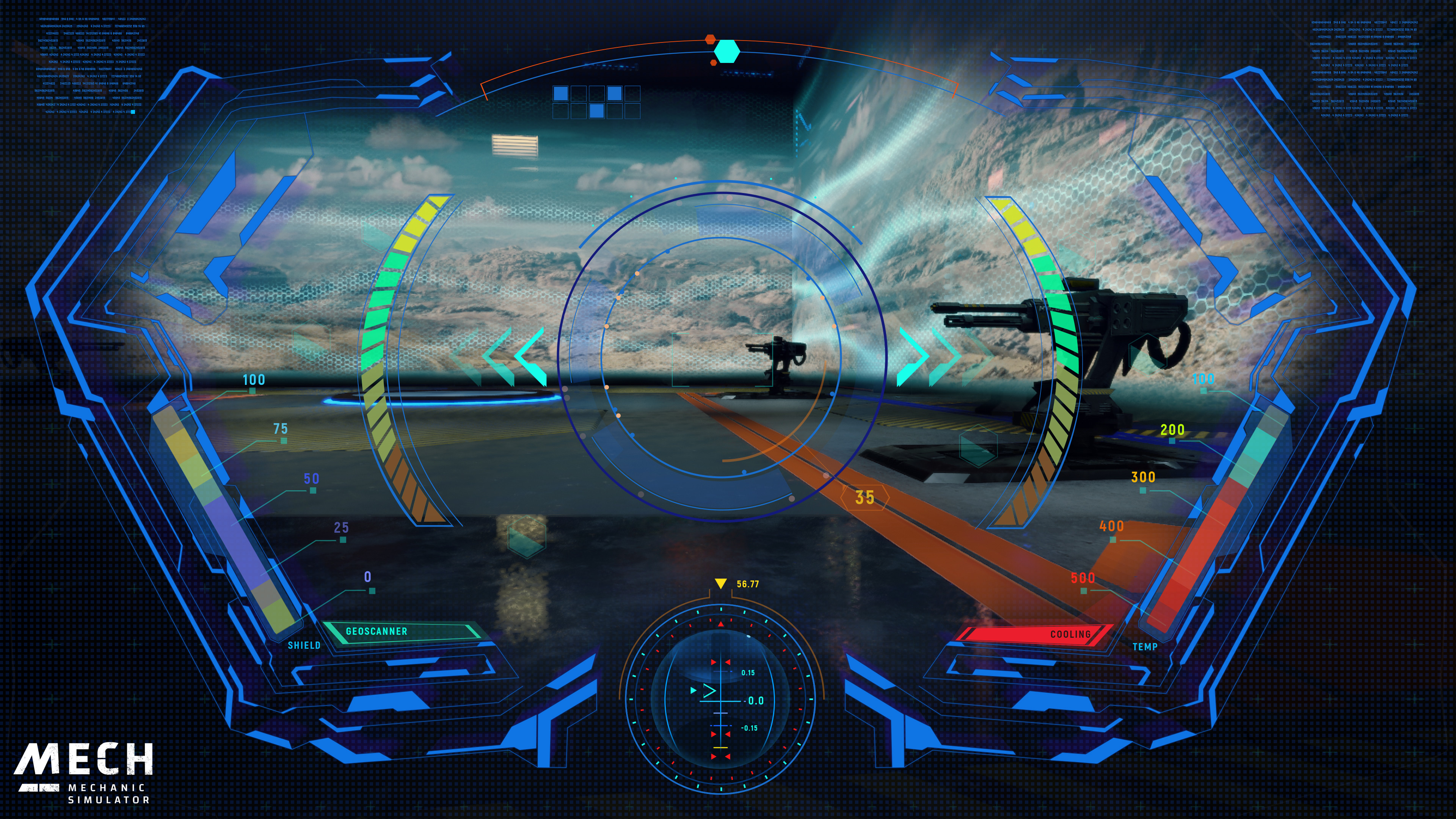
The calibration station actually requires you to solve a logic puzzle (aka, math), which upon completion, puts you in a virtual environment wherein you “calibrate” the mech by running around and shooting things. Eventually, you unlock stations which allow you to build your own mech, customize it with various paint pallets and decals, and even take it on missions.
TIL “calibration” means doing math and then shooting stuff.
There’s a surprising amount of game here for one with such a simple premise.
I wouldn’t call it perfectly executed, however. There are some things which feel a bit, oversight-y. For example, some of the background assets feel a bit cheap. Could be store bought or just default engine assets. The lighting could be more natural, as well. There’s a bit of a feeling that the game didn’t have a lot of artistic direction. The android “helper” is also entirely useless and unfunny. Thankfully, his voice over can be turned off in the options menu.
There are also some minor bugs, and missing textures here and there, although I might excuse them as 1.0 issues which could easily be polished in a patch or two. I even got a reply to my Steam review from the developer, asserting this would be the case.
I love getting replies to my reviews. Active devs warm my heart.
Despite some of the lack of polish, and the game going off script with stock trading and atypical puzzles, it still manages to work. I have to give this studio credit where it’s due: no one else made a game about fixing mechs, and no one else put a stock market in a mechanic game. So kudos for the creativity, and lots of points for the effort.
I’ll definitely get my money’s worth out of this one.
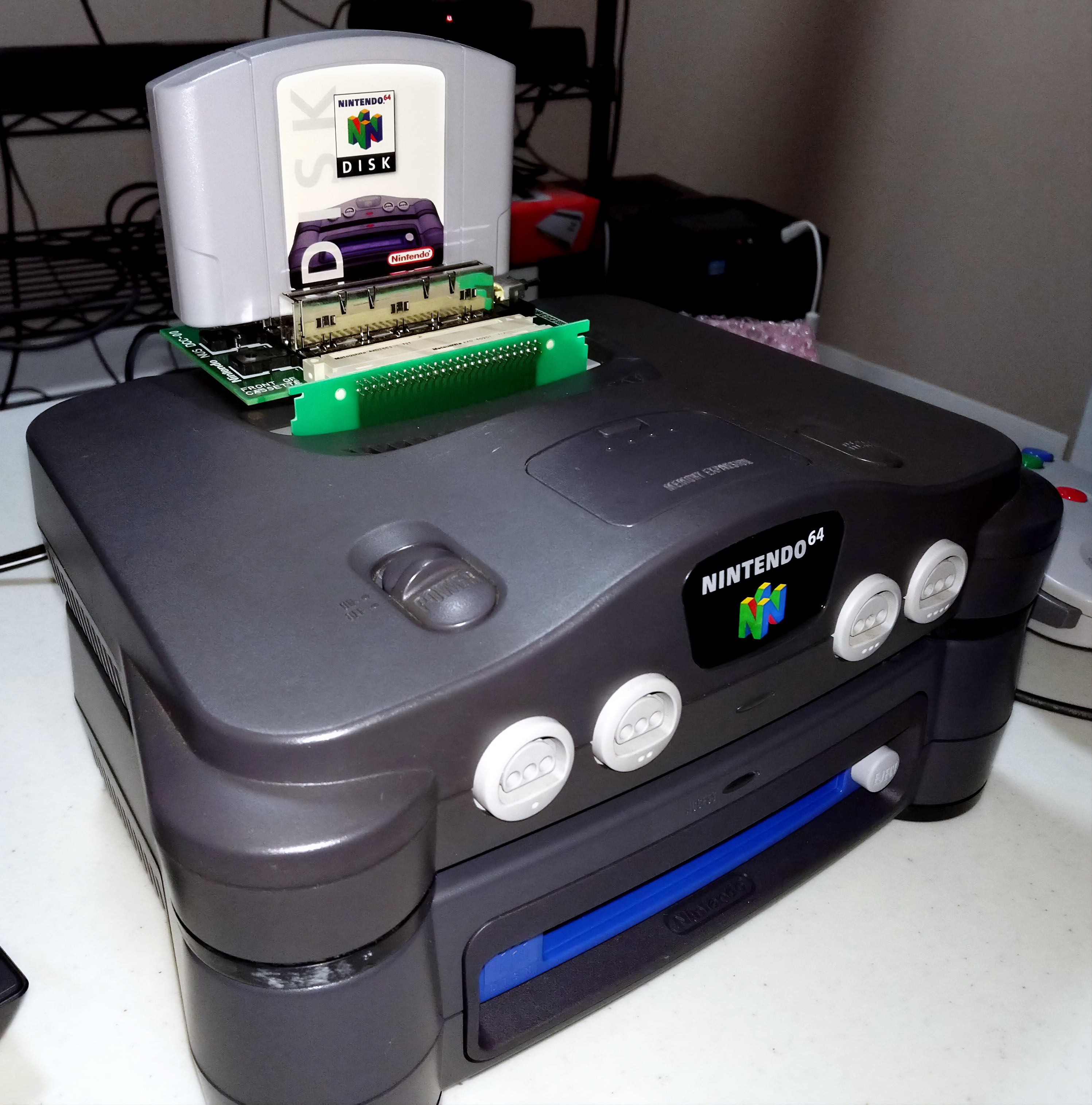
It was sent to him by a private (unnamed) collector for verification and documentation. Thankfully, all of that wonderful documentation has been provided for free to all of us via The Internet Archives in the form of massive, hi-res images.
Check out this absolute unit.
So what was the 64DD?
Well, it was a planned expansion drive for the Nintendo 64 that just never quite got off the ground. It was intended to provide additional content for games, not unlike modern downloadable expansions. Those of you who have owned an N64 may have noticed an extra slot on the bottom where this machine would plug in to your existing console.
I love coming across stuff like this.
It’s a reminder that the wheels are always turning, both long before and long after the popular games and systems are actually in our hands. We can postulate both on what Nintendo’s plans were for this device before they even released the N64, as well as what may have come had it actually come to market. They sold a couple units in Japan, but it was so late, it never picked up enough attention to actually create meaningful content. Most of what has been made available through the dev kits is very limited, though some sources say it would have allowed for personalized content creation; like taking screen recordings, making 3D animations, and even producing music. It’s fun to imagine what would could have been if we had that kind of creative freedom back in the 90s. Maybe we’d have seen additional content for popular games like Ocarina of Time, or Majora’s Mask, as well. Maybe there are entire games that simply never came to be because of the technological limitations of data storage in the 90s, which may have been solved by a device like this.
It didn’t stop some dedicated modders from making their own attempts at expanding some legendary games with this hardware, however.
This guy plays a full Ocarina of Time expansion on an N64 via the DD and it’s pretty remarkable.
It’s this kind of creativity that leads to new innovation. One of the reasons why I love digging up old games and hardware is because there is no limit to where people’s imagination will go. Between the speedrunners, the enthusiasts and the modders, entire genres and subgenres have been spun out of completely separate and original IPs. It’s no secret that modders have been the lifeblood of the gaming industry as we know it. Games like DOTA, Day Z, and Counter-Strike began their existence as fan-based add-ons, only to evolve into their own franchises which in turn inspired entire genres.
Even in recent history, Rockstar paid a modder $10,000 for fixing GTA Online’s load times. Mods quickly become part of the ethos of many popular games, and sometimes are even made more popular for it. Skyrim was made infinitely better by the modding community, and it is arguably its most compelling feature. And of course, I would be remiss in failing to mention the fan-made and Valve-approved Half-Life remake, Black Mesa.
Unfortunately, code theft is common within the modding community, because a) mods are by their nature, open source and b) the original owner of the game being modded ultimately has the final say in what code is allowed to exist within the framework of their game. If you add code to their game, and they decide to use it themselves, they are really under no obligation at all to pay you for your time, or even acknowledge that you did. So, kudos to Rockstar for paying out.
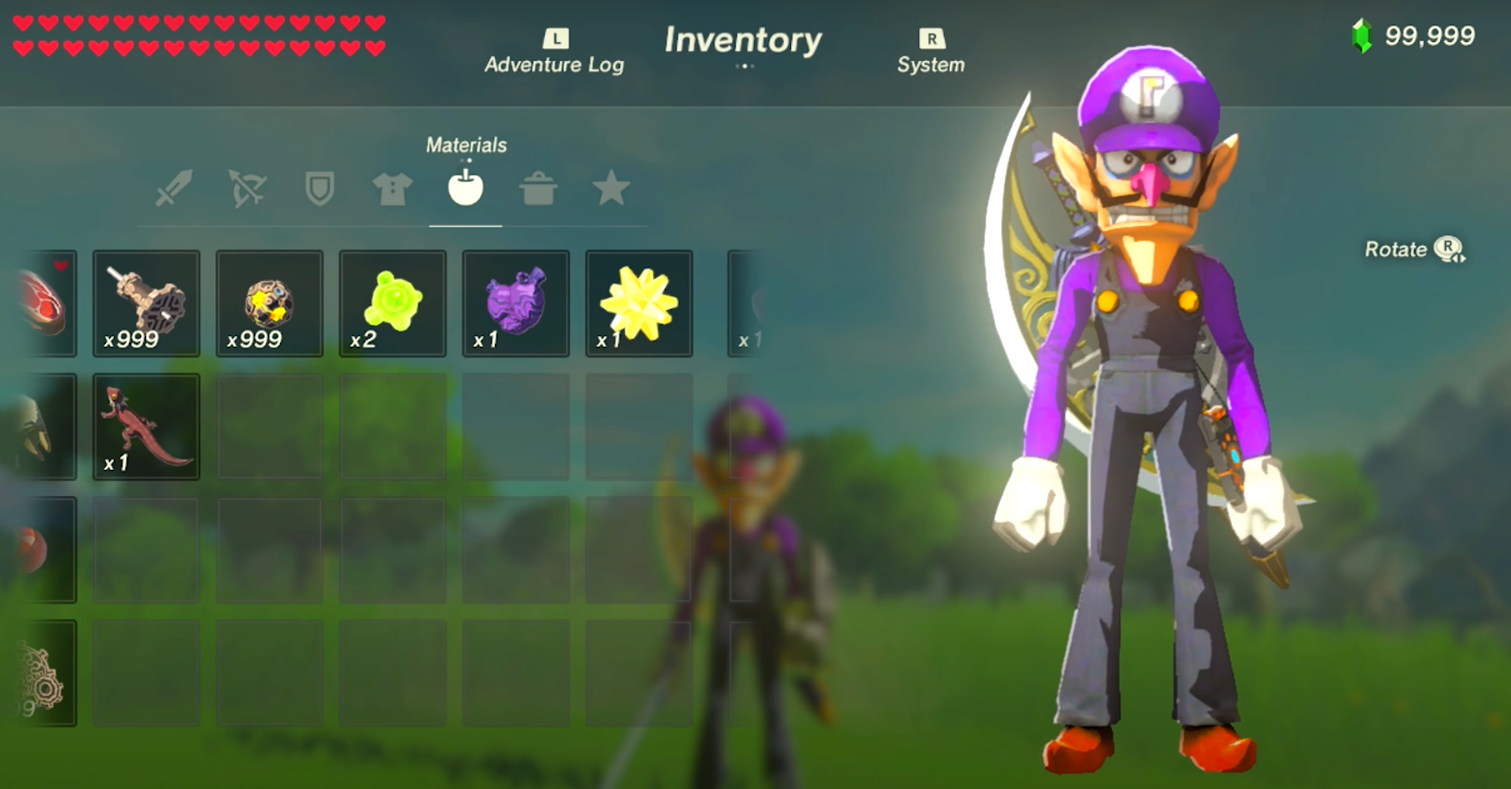
Modding isn’t always strictly above ground, either, since it sometimes does require some reverse engineering, especially when ripping from a current console game. Of course, that certainly didn’t stop the modding community from almost immediately getting Breath of the Wild working on PC. Mere weeks after it officially launched with the Switch, people were already inserting other and non-Nintendo characters and creating more hype for a game which, ultimately could only have helped Nintendo sell more copies of the game, and more Switch consoles through popularity alone.
Waluigi is finally redeemed.
I truly believe this power is underestimated even by the largest and oldest establishments in gaming. Especially since you see the influence of mods, and even emulators everywhere you look, even from the big guys like Nintendo.
Don’t believe me?
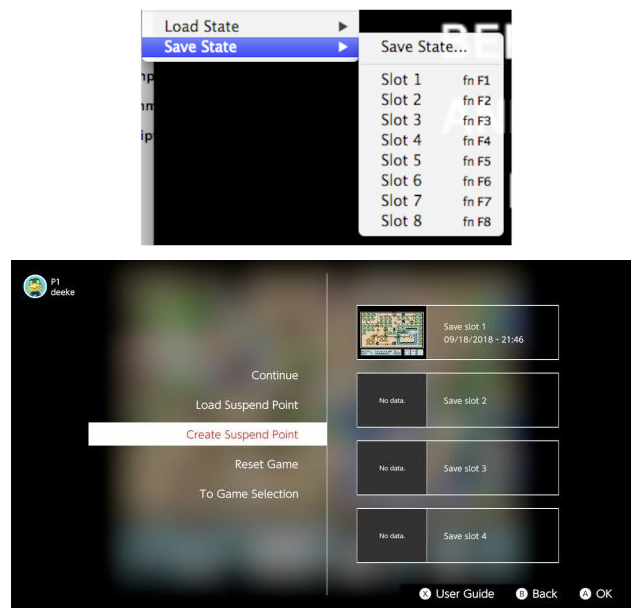
NES/SNES Online has a full-time save-state feature. You can stop a game at any moment: right before a boss, during a cutscene, whenever– save it, and instantly return to that spot at any time you want. I first saw that feature in old console emulators when I first stated trying to play SNES and PS1 ROMs on my PC in the early 2000s. Yes, I’m talking about nearly 20 years ago. You can thank the emulation community, largely accused of “stealing” games, for plenty of optimizations over the years.
On the top, a 3rd party emulator. On the bottom, the Suspend menu on Switch.
While I don’t necessarily condone piracy, purely based on the fact that I am myself an artist, and I believe in supporting other artists, I also don’t see it as the ugly underside it is often decorated as. Not only do I believe that information should always be freely available between people, but time and time again, it has been proven, especially for the gaming industry, that piracy can actually increase sales.
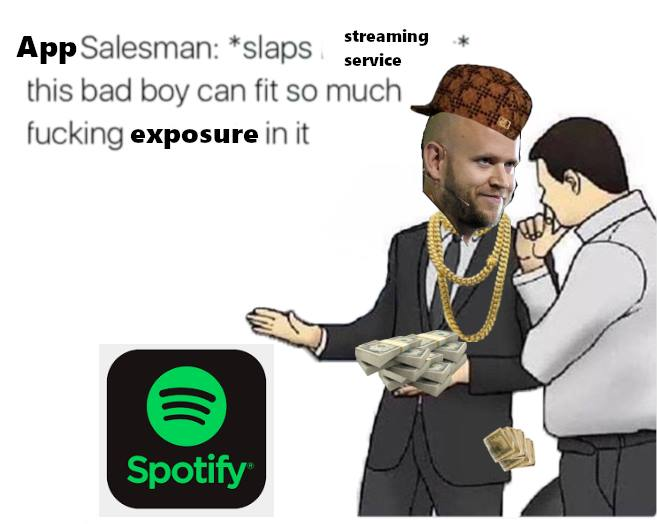
It may seem like a strange phenomenon, but it actually makes a lot of sense from an economics perspective when dealing with digital content. For example, piracy is still as available as it was 15 years ago (albeit, you definitely want to use a VPN these days, which are plentiful), yet far more people are willing to pay to stream video and music content. Why? Because streaming is insanely convenient. That’s what Daniel Ek, for all his faults, set out to do when he created Spotify in the first place. He wanted to create a better service than piracy could provide, and people were willing to pay for it. I thoroughly believe this is how the free market ought to work, if it is truly to be called free.
And yes, Daniel Ek is still a dickhead.
I can admit that I pirated a number of games when I was young and broke. Mostly because I was broke. So as a broke kid, I got to play, Civ V, Skyrim, and Mount & Blade and XCOM… all games which I have bought and paid for since. That’s the other thing, too. Piracy doesn’t negate the possibility that someone will buy the game later. It could be used as a demo of sorts. Plus, it’s far harder to ensure reliable updates, and online service is usually spotty or unavailable on pirated copies, so it behooves the player to buy the game in order to get the complete experience. I also firmly believe that most people who pirate a game without eventually paying for it were never going to buy it anyway. That makes it hard to justify the assertion that it counts as lost profit. Piracy also acts as a potential counterbalance to exploitative practices like platform exclusivity, or arbitrarily raising prices of AAA games. For better or worse, piracy is a form of free speech and freedom of information. Like drugs, its prohibition just leads to it being associated with seedier practices, but it cannot prevent it from happening.
Again, where would we be without the people who crack into software and share their findings and creations with the rest of us?
Despite the disappointment of Blizzard shutting down the private WoW Classic servers, I bet they would never have built their own version of it otherwise. I also bet there’s already another more secret one out there somewhere as well. Where there is a will, there is a way, as they say. The City of Heroes private servers still go on, even after having been revealed to the public, likely because NCSoft has no future plans for the franchise. So, in hearing that those severs are ever closed, it might be a sign of renewal, which could ultimately be a good thing. To that end, piracy is actually creating competition and demand, or at least revealing to companies that there is a market for something they didn’t originally have faith in producing.
A fan remake of Metroid II that Nintendo DCMA’d before releasing Samus Returns on the 3DS.
So, how does this all tie back to the 64DD? Well, it could have been a modding platform for the N64 back in the 90s, had it released on time and in the West. It most certainly is now. Nintendo may not have been too happy about it, since it was also tied to an online subscription service, which would have been costly to maintain in the 90s with dial-up internet, and modders would have most certainly looked to circumvent that. But we may also have seen content creation similar to what we see now, just far earlier. Nintendo was very nearly way ahead of the curve on that one. It’s what I appreciate about them, in the end. Even if they don’t always hit the mark, you can rarely accuse them of sticking to conventions and following the crowd.
At the end of the day, innovation is what drives the market to reach for new heights, develop new game ideas, and design new hardware concepts. It’s why Nintendo is still so prolific after more than 35 years in gaming. It’s also why modding and emulation will always have their place in gaming history.
Yeah, I know, some people will fight with me about this, and I have had lengthy arguments on the topic. The free-to-play model has indeed created opportunities for less fortunate players to get countless hours out of games, while even potentially profiting off the wealthier players. In some cases, it’s a win-win, and there are games which don’t abuse RNG mechanics, or gate content behind paid progression. Path of Exile is a solid example of this, and I managed to pump ~140 hours into it without spending a dime. When I do eventually decide to spend, it’ll probably only be around $40, which I’d say is pretty worth it for hundreds of hours of play time.
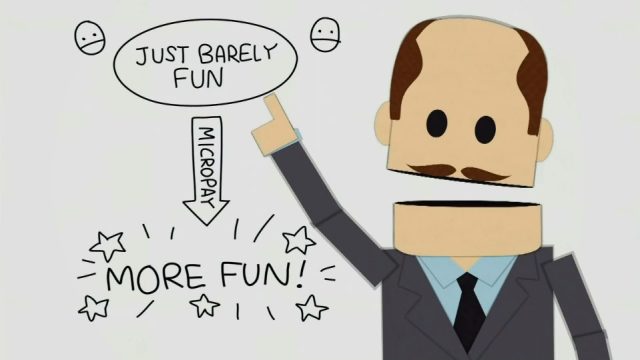
That said, if microtransaction stores and free-to-play models were made extinct tomorrow, I would not lament their demise. More often than not, they are exploitative casinos, or at the very least, include gated content and limited progression in a way which encourages spending just to have a little more fun. Fun and general progress should not be gated content.
If a game is otherwise slower, more tedious and less enjoyable because you don’t spend $200/month in the microtransaction store, then the game’s model fails. If the existence of “whales” (those who will spend thousands or more) is not only acceptable, but encouraged and tempered, then the game’s model fails. Genshin Impact is a prime example of a game that many love, but has a dark side of exploiting people who will empty their bank accounts regularly just to stay ahead.
This just isn’t a business model to me. Or at least, an ethical one.
While some may argue that this is a personal choice of the player/consumer, the fact is that these mechanics are introduced at a very young age to children who have no concept of responsible spending, or how gambling affects your chemical reward system. It’s literally gambling for kids, regardless how you package it. These mechanics are especially prevalent in mobile games.
Ok, ok so I know some of you definitely agree that microtransactions can be exploitative–and EA is even fighting a class action lawsuit as we speak–I can also agree that games like Path of Exile can do it responsibly. So, there is room for free-to-play with some oversight, and especially if we can just do away with cash-shop lootboxes entirely.
That said, I still believe a pure subscription model is the least exploitative and gives you the best potential bang-for-buck from a “game-as-a-service.”
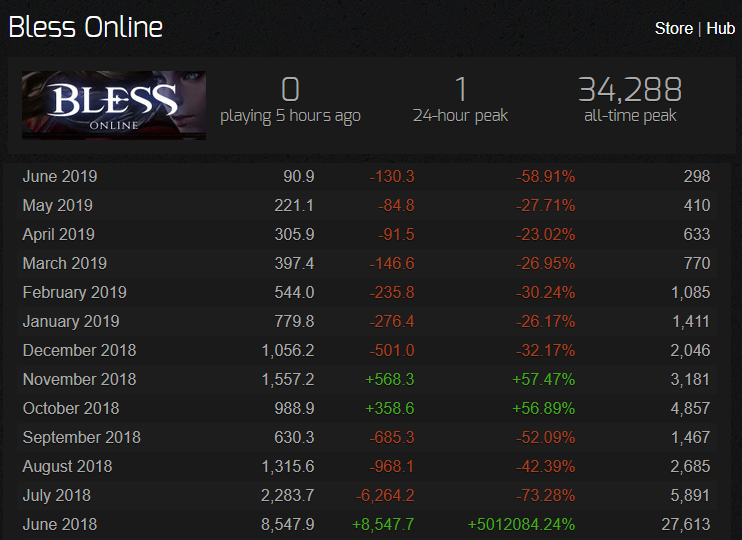
While it’s easy to look back at some of the classic MMOs with rose-coloured glasses–since it’s hard to emulate nostalgia without pandering, and it’s equally hard to compare modern experiences as an adult with past experiences as a teenager–there is still something to be said for the rise in classic MMOs compared to how quickly new ones lose players.
lol, Bless.
WoW Classic is huge and was a massive return for a lot of players. EverQuest Classic has over 80k monthly active players, and even the City of Heroes private server continues to live on. So there is clearly a demand for classic style MMOs, and not just because of the gameplay, but because you rarely had to consider your wallet when expecting new content. While you’d occasionally have to pay for an expansion every few years, and some games still had cosmetic shops–most of the time you could expect to have the same experience as everyone else, and could always expect a consistent flourish of new content.
It’s true that the argument existed, and even to some extent still does, that free-to-play allows for a much larger potential contingent of players, and especially casual players who may still drop $20-30 or even up to $100, when they wouldn’t even have considered paying a monthly subscription.
But these days, I don’t see that narrative holding up when everything is becoming subscription based. Aside from the rise in streaming services like Spotify, Netflix, Prime, Disney+, et al, we are even seeing a rise in game-based subscription services as well. Like Microsoft’s Game Pass, which is making waves with a solid library of games, and even recently added EA Play’s basic plan to it, effectively giving you two subscriptions in one. Along with Sony’s PS Now game streaming, and growing support for Nvidia’s GeForce Now and Google’s Stadia platforms, it’s hard to argue that people are unwilling to pay a monthly subscription for content.
So why should it be hard to sell a grand MMO with a monthly sub? If the game actually delivers content that isn’t arbitrarily gated, has consistent updates and regularly rewards players with events and surprises, then what is the hard sell? Sure, EVE and WoW have technically free-to-play content, but the majority of players pay the subscription. Same with Final Fantasy XIV, and Elder Scrolls Online and even SWTOR you ultimately want to pay the monthly sub if you want to get the complete experience. The oldest and most prestigious MMOs still seem to get away with a subscription model for the most part, so why are new MMOs so hesitant?
I’m weary of New World’s current lack of a funding model beyond the initial purchase price, because this often leads to dramatic changes in expected player funding either near, or post-launch. MMOs require constant upkeep and maintenance. They are the original, “game-as-a-service.” I can’t see it being profitable long-term without either, frequent paid content updates, a cash shop, or a subscription. It’s not to say that Amazon doesn’t have the runway to keep a game running in the red for a while, but how long would it be sustainable?
It seems to me that corporate targeted nostalgia and inspiration often misses the things that made older online games good: and that was their general lack of structure and ability to immerse the player without reminding them to buy something. Because even in a game like Path of Exile, where immersion is high, and advertising is minimal, there’s still a wall when you start to run out of inventory space in the late game. Even if it is a less obtrusive and arbitrary wall, it’s still a wall. It’s still a line you have to cross in order to make your continued game experience more convenient, less tedious, and thereby, more fun.
South Park actually did a whole episode about this, and how blatantly evil it is.
I just can’t get behind the idea of paying extra for gated fun. Maybe it’s my age. Maybe nostalgia’s call for the glory days of participating in grand space battles with dramatic political ramifications in EVE, or the sprawling freedom afforded in the open world of Ultima Online has summoned in me the opinion that it never got any better than that.
It’s not to say that I didn’t find fun in more modern MMOs with micro-transaction schemes, and shady lootbox systems like ArcheAge and Black Desert Online, but eventually it was those very systems that burned me out–even more so than the tedious gear and level grind they presented. I can’t be the only one who feels this way.
Maybe I’m a relic of the past who needs to get with the times and forget about the whales who probably have more money than brains anyway–but I still feel like my empathy for those with addiction problems or children who simply don’t know any better still gets the best of me.
I’ve been working on a new rant about modern MMOs, but I can’t stop thinking about this piece by Eurogamer from a few days ago, about an archaeological find of a decades old Hyper Neo Geo 64 game prototype (arcade machine guts) found under a tree in a California field.
Not only does it contain a thought-to-be-extinct demo of Samurai Showdown 64, which would go on to help set the stage for early 3D fighting games, but it is also the very first of only a few of these ever to be made, with a 00001 printed on the PCB.
It also worked flawlessly right away, which is pretty remarkable for a bit of electronics sitting out in a field for 24 years. Since Eurogamer not only covered this subject quite thoroughly, and even got an interview with the man responsible for getting it running, I will simply direct you to their article, along with the video made showing gameplay, and comparing it to the finished product.
Praise the Emperor. Between this and Darktide, it looks like 2021 will be the year of shooters set in the Warhammer 40,000 universe.
What we have here, is a game that looks like mash up of the modern Doom games, with Titanfall inspired gymnastics. It’s published by Focus Interactive and developed by Streum On Studio, who is responsible for the likes of other shooters, and even a previous 40K game, the Left4Dead style co-op shooter, Space Hulk: Deathwing.
It looks great, too.
I continue to love that the 40k universe is developed by a wide variety of publishers and studios, with tons of interesting and even quirky ideas, like the recent arcade aerial shooter, Warhammer 40k: Dakka Squadron.
Necromunda: Hired Gun is set to release on June 1st, and is currently discounted by 15% (on Steam) until then.
I have a lot of feelings about both EA and Microsoft these days, and most of them are bad. I even recently had a big ol’ rant about exclusivity and how big publishers owning everything is bad for everyone.
That said, GamePass is a good idea. While the XBox software sucks on PC, which I will repeat until that changes, GamePass has a pretty solid selection for the monthly cost, and with EA Play’s standard library now being included in the Ultimate plan, that selection just got a whole lot bigger. Not that I’m a huge fan of EA titles, especially those with exploitative microtransactions, or limited content for the “AAA” price, the fact that I can now play them for all-in-one price of a GamePass subscription means I don’t have to pay for any of it.
This is pretty tempting.
I’ve had a GamePass subscription since November which is currently valid through May. While I never actually paid for it (ok, technically $1) thanks to various promotional offers, it continues to get more and more tempting, at least on short term bases. With a lot of big titles available to pay for a single monthly cost, there are plenty of games that I know I’ll only play once, or games I just want to try out… picking up GamePass for a month or two could be well worth it.
Mostly though, I use it to check out games I eventually want to buy for my Steam library, because games are typically more stable there. Although, recent reports say that the new version of Neir Automata which just arrived on GamePass is a new build that is more stable that its Steam counterpart.
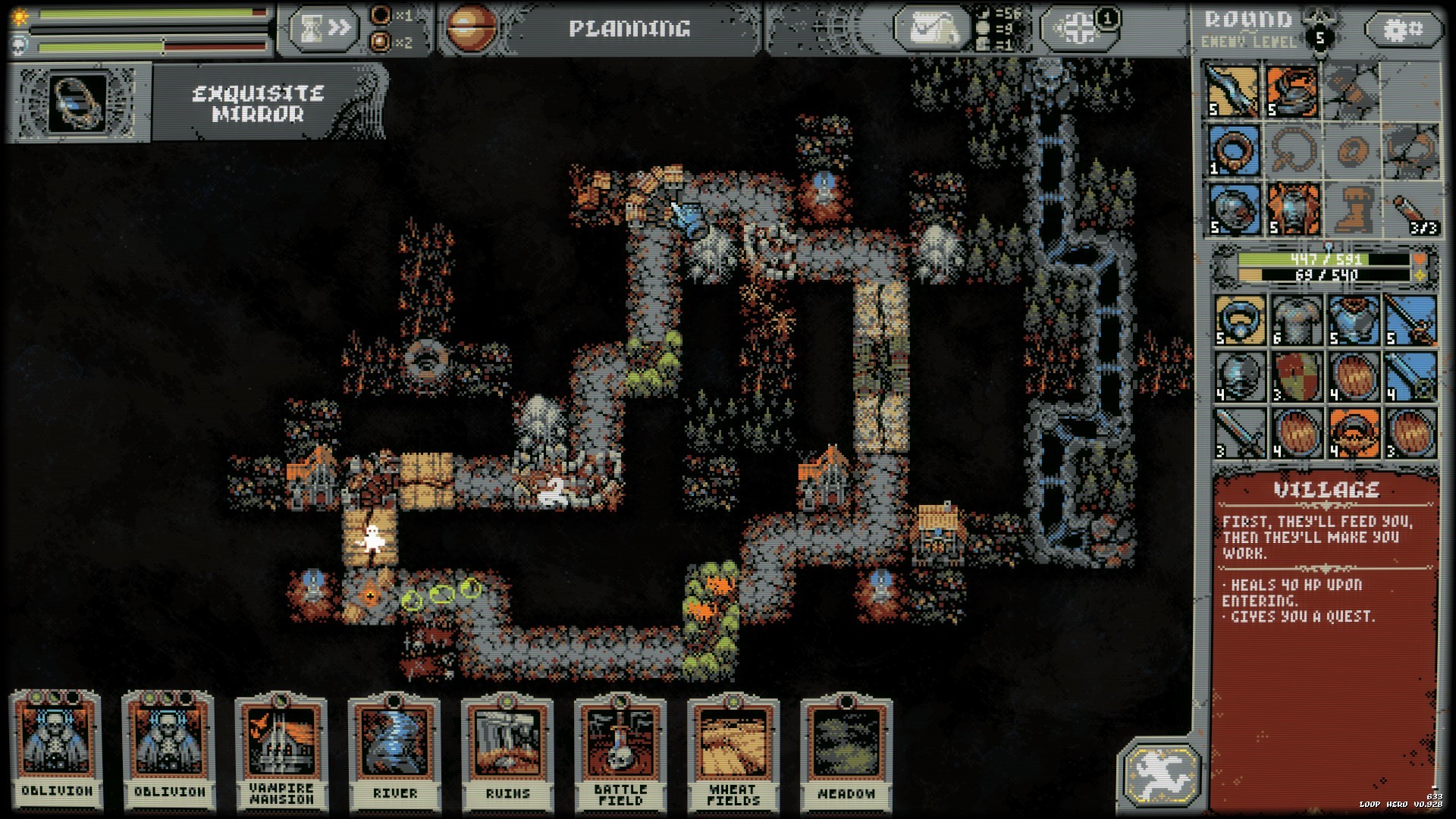
So I bought Loop Hero a few days ago, and can’t seem to do anything else. I’m not the only one, either. While it hasn’t blown up quite to the extent of Valheim, which is an unstoppable machine of unrelenting consistency, it’s doing quite well for an indie game quite intentionally designed to look like it was made 30 years– so much so that it even has a CRT scanline filter.
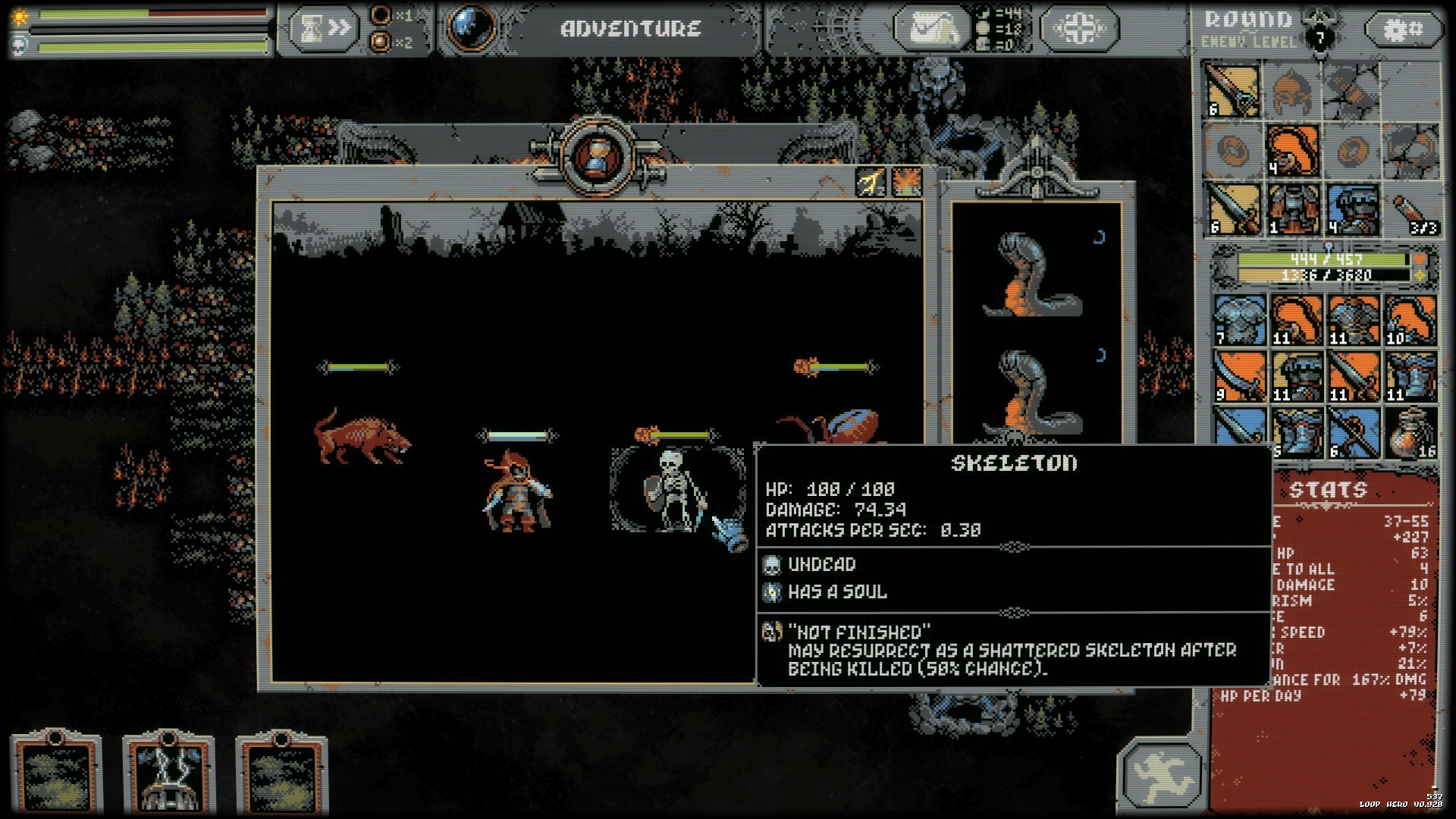
In its first week, it sold over 500,000 copies, and sits at a 95% with nearly 10,000 “overwhelmingly positive” reviews. It rocks a very consistent 40,000 simultaneous players, which is pretty good for a roguelike, reverse-tower-defense, deck-builder. I know, it’s confusing just saying it. It’s a game that’s hard to describe, and even harder to illustrate with images. Even following a guide wouldn’t make much sense without actually playing the game yourself, and it’d probably be pretty boring to watch a play-through.
Time for some stuff on a page.
Yet, this is probably the most innovative game of 2021, so far.
I’ll do my best to break down what makes this such a hit.
First, you take two, simple, recognizable and ancient game formulas and flip em. Especially the tower defense part. Like a TD game, you have a set path of travel, except you are the character on the path, and baddies spawn to impede your progress. You place towers along the way to give you bonuses and resources to collect, but they also act as spawners, increasing the number and variety of monsters in your path. The point of it all, is to complete as many loops as you can before returning to your homestead, where you use the resources you acquire to build up your base, unlock new items and classes, so you can return to the loop to gather resources so you can continue to upgrade your base. It sounds repetitive–and it kind of is–but it’s also marvelously addictive.
There are lots of stats to read. Read things. It helps.
The roguelike elements are present, in that every loop is unique, and you start fresh at level 1 every time. Death is not nearly as punishing as most games, and often serves as a narrative punctuation, and you even still get to keep at least 30% of what you gathered, or more if you have the right items which protect your losses. So, while it is technically a roguelike, the elements are more of a gameplay mechanic, rather than simply your main incentive to stay alive.
So far, it probably all sounds pretty straightforward, right? Do loops, get loot, repeat. Yet, somehow I’ve already done this for 35 hours in 3 days, so there’s something in there keeping me going, and it’s the depth.
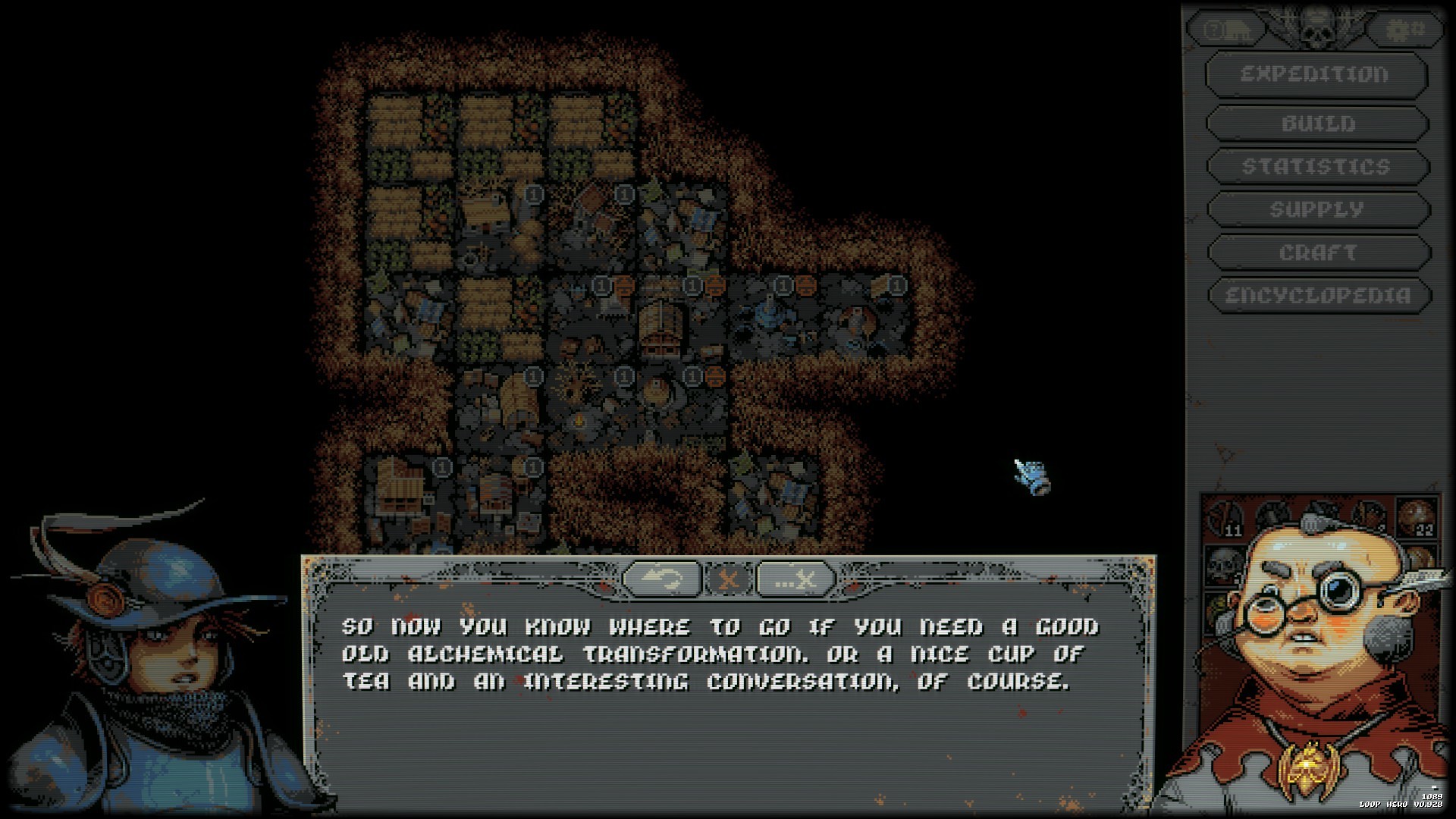
This game is way deeper than it appears on the surface, and even with the amount of time I’ve put in, I still haven’t figured out all the potential tower combinations that exist. Like many other tower defense games, you can combine the effects of towers to either help you, or hinder the enemy, or sometimes vice versa and both. However, these effects are not immediately obvious, and exist nowhere in the game’s description or lore. When you unlock these combinations, they are described in the in-game encyclopedia, but you will not be instructed on how to make them.
There is a surprisingly wide variety of characters and a clever narrative to unravel.
This leads to complexity of gameplay I never thought possible from a tower defense game. Suddenly, I’m not just arbitrarily looping to unlock better gear and new buildings at home, but I’m doing it to make new discoveries about how the game works. For such a seemingly simple game, I’ve never had so many, “ooooooooh,” moments, where I realize how to modify or improve my gameplay techniques.
This is the spark of creativity. Not just from the developer, but also for the player. It’s why people like crafting games. People like being given choices, and opportunities to build and invent. It’s not just sandbox-y, player freedom, it’s the feeling that your creative choices make you better at the game. That’s a magical feeling. Loop Hero pulls off that magic in such a way that it somehow feels like it’s reinventing the wheel with mechanics that aren’t all that new. It’s almost like if someone just flipped a tire inside out and realize this could be a whole new way to get around.
K, sometimes you shouldn’t reinvent the wheel.
Which is perhaps why it’s so appealing. There’s nothing here that should be entirely unfamiliar to the seasoned gamer. The basebuilding is fairly straightforward, but open-ended. You have a large grid, and you can place most buildings wherever you want within reason, and within a certain radius of other buildings. The deck-building is simply picking the bonuses and towers you want to show up in your hand while you’re looping. Collecting loot and leveling up in the game is straightforward, increasing in loot rarity and monster difficulty every time you start a new loop. Combat is simply watching your character attack, while you sort out which items you’re using.
Yet, there’s also no other game to compare this to. It has somehow taken so many familiar elements of game design, and made something entirely new. This isn’t a clever homage, or a throwback, even though it looks like it is.
What it is, is something that will inspire a new genre. I am quite certain we will soon see Loop-likes, and I am here for it.
/gameon
P.S. I just learned there is a game called Reinvent the Wheel and it looks neat.
Ok, I will try not to be completely inflammatory in this one, but holy shit, this crap is getting old. As of this morning, Microsoft now officially owns ZeniMax Media (Bethesda’s parent corp), and wasted no time telling us that there will be Bethesda games exclusive to PC and Xbox in the future.
As you may surmount by my intent to restrain myself from writing an entire post of just expletives, I don’t like platform exclusivity. I fucking hate it.
I hate Epic Game Store with a fiery, burning passion and have never spent a single dollar of my own money in there because it is a shallow, contemptable cesspit where competition goes to die. And yes, this is me holding back. I will likely have a rant about EGS alone at some point in the future.
It true, tho.
Platform exclusivity is anti-consumer. Plain and simple.
I know, I may have already lost some of my audience due to my language, or because I might be coming across as a Steam fanboy (I am, a little), but just hear me out: exclusivity on a platform that should and can be open (like PC) is a cancer that burdens the consumer with less choice, more complication and ultimately, encourages piracy.
I wasn’t going to go in on this today, but fuck it, we’re here, so let’s do this. Get ready for a long rant about why exclusivity is bad.
First, let’s talk a bit about film and music.
Back in the late 90s and early 00s, digital piracy was all the rage. Napster and other early file share programs were credited with killing both the film and music industry. (More so the music industry, but that’s not particularly relevant). And of course it did. Not only did it change the price of a $20 CD or DVD to free, but it also made it incredibly easy to find anything you were looking for. Both free and convenient. Hard to beat that kind of value.
But as some of us will remember, quality was often lacking, and there was always a risk you might download something illicit, or harmful to your computer. So when iTunes, Netflix and Spotify came along… it was a breath of fresh air. Suddenly, I can buy any song for $0.99, or just pay a monthly subscription and get a huge library of content that I can access anywhere at any time. Plus, now I’m at least giving something back to the artists.
Daniel Elk is still a dickhead, though.
Yet, as we’re all well aware, these days it’s become less simple, at least for film and TV. Music remains fairly available across most platforms, but movies and TV shows are being more and more sectioned off as they were when they were on cable and network television. When before, you just had Neflix and Hulu, now there’s also Amazon Prime, HBOMax, Disney+, CBS All Access, CRAVE, Crunchyroll, and a host of others. Most of these have exclusive content which was at one point, (or even still, depending on what country you’re in) on Netflix. What was once a $8/month sub, has become $80-100/month, which is basically what we were paying for cable in the before times.
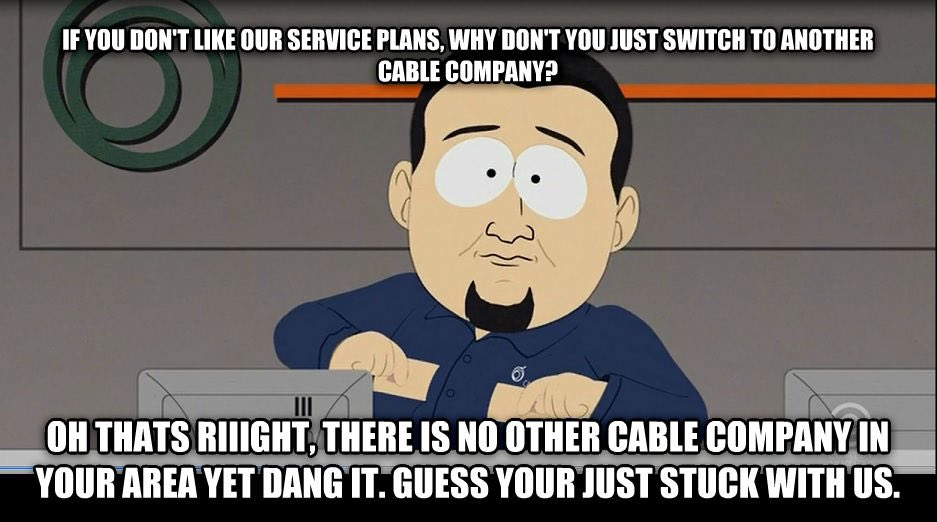
This is exactly what we were trying to avoid. This is why millennials and younger generations ditched TV in the first place. It’s expensive, riddled with advertising, and sectioned off into “packages” which very intentionally kill consumer choice, because we really have no options when it comes to service providers. Even in a big city, you rarely get more than 2 or 3 options that are worth anything.
Been a while since I’ve made a good South Park reference.
So what happens? We go back to piracy. I’m certainly not paying for 6 or more subscription services. I’m paying for one or two at most–and then I will find the shows and movies that are otherwise unavailable, via other means–or just not watch them.
I feel the same way about gaming platforms, and especially those which are available on PC. Some of you will say, “well a launcher is just a launcher. You can still play it on PC, so what does it matter if it’s on Steam or Epic?”
A lot, actually.
First, let’s talk about platform features and software design.
I wouldn’t mind other launchers so much if they weren’t absolutely atrocious in their design philosophy. While Steam is by no means perfect, and can be a bloated, dated looking mess sometimes… it’s nearly 18 years old. It’s old enough to vote, as of this year. As such, it has features that other platforms have never even considered adding that I can tell, and it blows my mind, since this should be the bar of quality we’ve come to expect. Especially considering Steam was virtually the only combined DRM platform and store that existed on PC without any competition for years. It is nearly single-handedly responsible for the entire marketplace of modern PC gaming as we know it.
Anyone remember GameSpy Arcade?
So why can’t we have the same standards for design on other platforms? For example, no other platform has default controller compatibility other than their own. Sure, Sony supports Dual-Shock controllers, and Microsoft supports XBox controllers, but Steam supports any controller, fully in-UI whether in full-screen or desktop mode. Even the Switch Pro Controller, which was never given any official PC support by Nintendo–Valve just took it upon themselves to make it work. No other platform even attempts this kind of stuff.
Certainly not EA, with Origin which has been around nearly as long as Steam at this point, and not Ubisoft with UPlay, which has also been around almost as long. So why should I support their platforms when they bring nothing to the table? Plus, at least EA and Ubisoft, for all their faults, still bring most of their games to Steam, and allow you to use both launchers (awkwardly).
The good people at Valve added support seemingly overnight, with little fanfair.
So at this point, you start to look at some of the exclusivity that publishers like Epic and Microsoft are trying to pull lately, and I just have to ask, “why?” What is the value they believe they bring to the table? If anything, exclusivity agreements have caused actual irreparable damage to some games and developers. The recent fiasco with Hitman 3, for example, wherein the developer intended to include content from Hitman 1 and 2 for those who already owned the game, but this turned into a technical impossibility, because Hitman 2 doesn’t exist on Epic Store, and Hitman 3 is a timed Epic exclusive, so no one can get Hitman 2 content for Hitman 3 on Epic Store without having to individually buy the content. It’s a fucking mess that could have been avoided simply by not enforcing exclusivity. People who already own the first two games on Steam could be enjoying all the content in Hitman 3 right now on PC, but they can’t, and the only honest answer to “why not?” is greed.
I wouldn’t even mind Microsoft having platform exclusivity if the XBox software on PC wasn’t so horrendously bad. For some reason, they hide game files behind complicated hidden folders, which causes games to crash. This is common problem, and I’ve solved it more than once by purchasing the same game again on Steam. And again, because these files are hidden, it makes it harder to hook the game as a “non-steam game” (a feature Steam has that allows you to hook games outside of Steam so you can use Steam-releated features like 3rd-party controller compatibility). So I can’t use my Switch Pro Controller with Xbox Gamepass games without complicated workarounds. Which sucks, because I otherwise think Gamepass is a pretty good idea.
So, when I see Sony release first-party Playstation titles on Steam and other PC stores a couple years after they release, I see a publisher who understands that branching out to other platforms is good for business.
More games on the way from Sony (allegedly).
Because here’s the thing:
People often argue in favour of Epic’s exclusivity deals because they are pro-developer. Admittedly, they are, especially for tiny devs who would otherwise not get the exposure, or financial runway. When a multi-billion dollar publisher comes along and offers you millions for a one-year exclusivity deal, it’s hard to turn down, and in some cases, I would totally say it’s worth it for the developer. Epic also takes a comparatively low cut from sales.
But why can’t they do both? Why can’t a game launch on both Epic and Steam at the same time? Wouldn’t the developer stand to make more money since both platforms are popular and well-funded? It would be the best of both worlds, really. Epic advertises as a smaller, but curated list of games that has fewer overall customers but takes less of a cut, whereas Steam has the mass appeal and larger potential outreach. It’s a win-win for an indie developer.
Stardew Valley is playable on everything including your latest smart refrigerator, and is developed by one man.
Besides, Epic doesn’t do any of this out of some sense of nobility, or “pro-developer” sentiment: they just want their slice of the pie. As is evident in their on-going legal battle with Apple, they just want to have their own store on every platform, so they can continue their effort to establish their exclusive brands. They aren’t fighting “against” Apple and Steam’s 30% cut, they just want to cut off a bigger piece of the industry for themselves while appearing to stick it to the man.
It’s not David vs Goliath, it’s King Kong vs. Godzilla. Sure, it’s fun to watch, but the result is a destroyed city that neither of them have to clean up. Or in this case, a joke of a “AAA” gaming industry that cares more about revenue than QA, because consumers will flock to a popular franchise, just because it is popular. They don’t give a shit about quality control. Hence, the abomination that is the recent Avenger’s game.
Platform exclusivity just encourages people back to piracy. It’s doing it for TV and film streaming, and it will do it to games, as well. In an ideal world, we’d pay artists directly, and tell major publishers to fuck right off.
This is scientifically the best G vs KK meme, and if you don’t get it, I feel bad for you.
We can look back to Dark Souls as an example. The first PC port was an afterthought. It was locked at 30fps, low texture resolutions, and had terrible online functionality. Despite this, it was still a hit, and resulted in From Software not only remastering it, but also releasing every subsequent Souls’ game on PC, simultaneously with console release. Same with the release of their latest IP, Sekiro. None of this would have happened had From decided to keep Dark Souls a Playstation exclusive.
Exclusivity does not breed competition, or innovation. It only stifles consumers and reduces potential outreach, while encouraging piracy and other alternative means. While I excuse a few companies like Nintendo, because they often have a platform which is dramatically different from others in a way that makes it worth while just for its unique features… the fact that Breath of the Wild emulation and modding on PC is so popular should be evidence enough that Nintendo could stand to make even more money with an official PC release.
Not that I’m expecting Nintendo to start pushing Mario and Zelda to Steam any time soon, but it’s a nice dream.
/gameon
Because who doesn’t want to play Breath of the Wild as Waluigi?
I’ve been trying to put together a comprehensive modern review of No Man’s Sky, but I keep getting distracted by other games. This one, in particular, I’ve been paying attention to for a while. But since I have already pushed the level cap, I figured I might as well do a review.
Normally, I’d hesitate doing a review outside of Steam for a game so fresh into Early Access without an available end-game, (compared to say Valheim where you can fight bosses, dive dungeons, and pump hundreds of hours into base-building alone, or Dyson Sphere Program, which has obvious missing elements, but you can still achieve the final goal of the game), but I’m making an exception because of how polished the current game already feels, despite barely breaking into the prologue of the story and having a level cap of only 14.
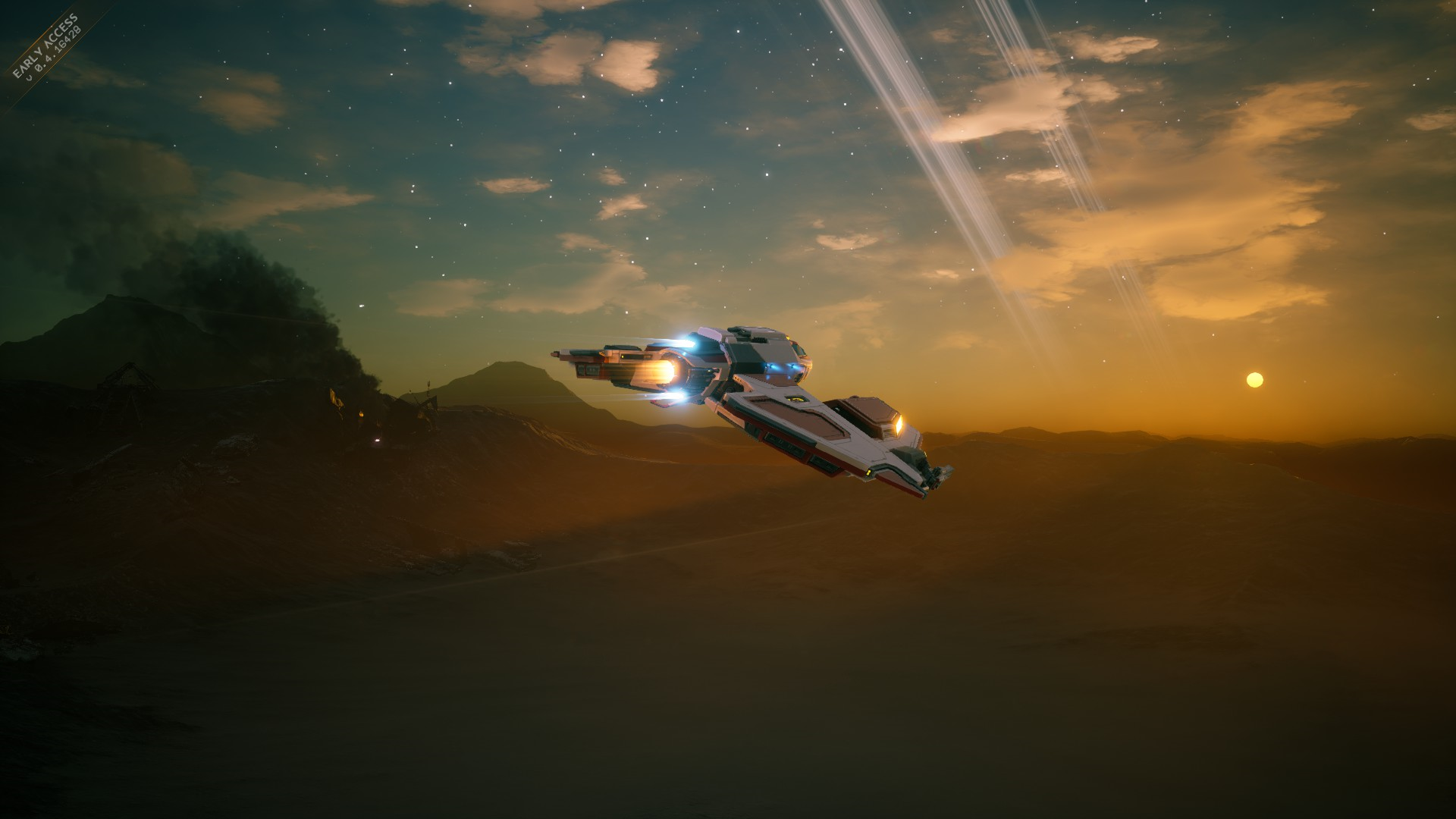
Also, the game takes some pretty nice screenshots with an ANSEL powered photo mode.
While there are a number of random encounters, and continuous spawns of baddies in certain areas, the game is fairly hard-capped for content at around 25 hours. The other important thing to note, is that this game will likely never be content complete during Early Access. It never was for the first one, (and I bought the first one in Early Access, as well) so I don’t expect it to be in this one. The developer has also expressed this sentiment. I think it’s important to know this going in, because the last game had some lamentations of abandonment towards the nearing of its completion, because it didn’t get a lot of updates towards the end.
However, when it did release, it was a massive opening up of content and narrative, so I have the same expectations for this game’s release.
So what comes along with those expectations?
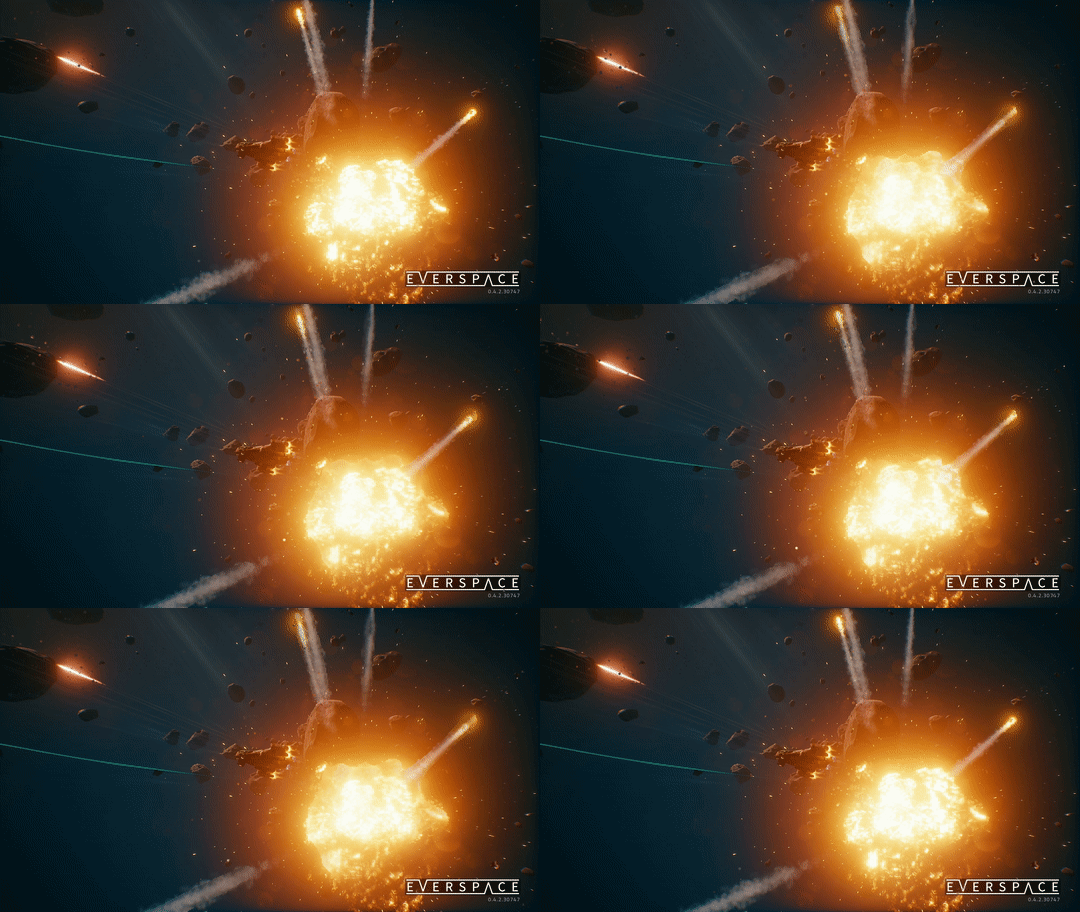
Expect a lot of screenshots.
Well, Everspace 2 is a lot like the first one, mechanically speaking. In fact, it’s near identical. Fans of the first game will slip into the feel of the sequel without skipping a beat, and that’s not a bad thing. The first game had great graphics and smooth gameplay. It had tons of exploration, combat, crafting and variety of encounters. The problem, is a lot of these mechanics felt locked behind the roguelike death: both in how you unlock more ships, but also in that none of your efforts felt like they mattered. While the progression shared a lot of similarities with FTL, it didn’t quite use the formula in a way that fit the narrative. FTL rarely wants you to fail, despite its difficulty curve, while Everspace *needs* you to fail at least a few times to further the progression of the story. Every time you play FTL is intended to be a new adventure, whereas Everspace is a continuation of the same adventure by one individual.
It’s not to say that I think Everspace uses the FTL progression system poorly, but I think it could have done it differently.
The first game takes pretty screenshots, as well.
Thankfully, we have Everspace 2, which does away with all that and drops us into a sprawling open world. All of those materials you acquired, you get to keep and stash and hoard and craft with. Unlock ships so you can line your hangar with them. Buy them, trade them, upgrade them. There is a lot of freedom already available in this early version of the game.
Not to mention variety of gameplay. There are a dizzying number of puzzles hidden around every nook and cranny. You can literally fly inside the core of orbital space cities to dig for locked containers, and find their respective keys. There are mini-games to detonate giant asteroids for their resources, or bounce lasers by physically strapping a mirror to the front of your ship. It’s even scratching the ARPG itch with the crafting and loot system, and has a lot of potential to fill the void left by classics like Freelancer and Descent.
Seems legit.
I don’t want to go too hard into comparing it to legendary games, or games with much bigger scopes and much bigger studios. The developers have already expressed how intimidating that is, and they want to temper expectations, which is fair; considering how far hype can take a game, and inflate expectations.
That being said, I still feel like this game’s potential is huge. Even if it doesn’t live up to the impossible standards of meeting nostalgia’s call to the 90s, or matching the sheer size and density of open worlds existing in games like The Witcher 3, there’s no reason it can’t stand in its own shoes.
For one thing, this is probably the most polished early Early Access release I’ve ever seen. Framerates remain smooth as silk, and there are no obvious missing textures or fritzy AIs running around. I’ve had no client crashes, no audio glitches; it nearly plays like a finished game right up until you hit the level cap and narrative cliffhanger. It’s nice to be able to say that when you compare to some recent full releases of “AAA” games.
I know, Cyberpunk is an easy target, but I do actually love the game.
So, do I recommend buying Everspace 2 in Early Access?
Conditionally.
Yes if:
You really just want to play the game in its current state because you are desperate for fresh space action.
You really liked the first game, and want to support the developer while they finish this one.
No if:
You are expecting the game to be finished within the year.
You are expecting a complete, or near-complete game experience at any time during Early Access.
When the game is finished, I’m sure I’ll have no issues recommending it to anyone who is interested. I’ll continue to check in on the game as it develops, but I’m not expecting to see a *lot* of content added to the game until it’s finished, which likely will be some time mid-to-late 2022.
At the end of it all, I have no regrets with my purchase, and can’t wait to see what comes next!
I’m going to have a little dignity, and spare you the sight of yet another poor fan-made mockup of what the next Switch might look like. Crap like that is one of the reasons I started writing again. There are no images of what the next Switch what will look like, and we know very little about the appearance in general, other than it is very likely to be sporting a new 7″ Samsung OLED. So, while I will be doing a lot speculating here, remember that it is still just that–until we get an official announcement from Nintendo.
According to a fresh batch of information from reputable online leakers and insider reports from Bloomberg, who has been a strangely consistent source of gaming news in recent days, it sounds like production of the next version of Nintendo’s Switch is just around the corner. According to the Bloomberg report, a 7″, 720p OLED screen will start mass production in June, and insiders say it will be for Nintendo’s next console.
There, I did a mockup, just for you guys.
While the screen is a bit of a step up in size, and will likely have higher contrast with lower power requirements, it remains the same fairly low resolution as the original Switch. That said, our reputable online leaker says the console will be 4K capable in big-screen mode, thanks to Nvidia’s DLSS technology. Since the first Switch uses a custom Nvidia Tegra mobile chip, it does make sense that Nvidia would be responsible for the Switch’s new GPU as well. Considering the leaps DLSS 2.0 has made in the last year or two with improving framerates, especially at higher resolutions, it sounds like the next-gen Switch should have no issues keeping up with its next-gen counterparts from Sony and Microsoft.
Despite having a rough time competing with Xbox and Playstation throughout the late ’00s, and early ’10s, Nintendo has maintained strong performance with Switch sales, and has been the number one selling console since 2019, even since the release of the new XBox and Playstation offerings.
While Nintendo’s stumbles have been no secret, they’ve never waivered from trying to innovate, and Nintendo’s diversion into motion-controls was quite a hit with the first generation of Wii, even if the more hardcore gamers were turned away from its lack of traditional style games, and popular 3rd party franchises. So much so that even Phil Spencer of XBox legend, recently admitted he’d never have Nintendo’s brevity when it comes to challenging the norms.
That said, both Sony and Microsoft are looking strong, provided they can push consoles out to break shortages which have been ongoing for months. Against my lamentations over poor software design, I have to admit XBox Gamepass is a marvel subscription service, even on PC, and Sony seems to understand that PC is a viable market as well, with not only recent hits like DEATH STRANDING and Horizon Zero Dawn, but we even have a fresh batch of new rumoured first-party Sony titles on the way:
I hope this is accurate, because I will play them all.
Bloodborne and Ghosts are two games I’ve considered buying a PS4 to play. There are a few others as well, but I really have to hand it to Sony for understand that there is a market beyond console exclusivity.
I guess the real question is: will Sony and Microsoft have product to ship this year? Or at least, will they have product to ship by the time Nintendo announces their Switch successor, which is sounding more and more real all the time? It’s even suggested there will be a few exclusives, which begs speculation as to whether it will be a refresh, or an entirely new console.
The rumoured name of the new machine is the Super Nintendo Switch and I honestly love it. I believe the SNES is the machine that first was able to capture games as more than just a past time, but as a piece of art. Grand RPGs, colourful adventure games, platformers of every kind, spawning and inspiring entire genres, and showing us some of the greatest talent from early developers like Rare and Midway.
Will Nintendo or any game maker ever capture that magic, again? It’s hard to say, but it’s also hard to compare this current era to what was the boom that created modern gaming as we know it. Sometimes, you’re just chasing nostalgia, and it’s an easy dragon to chase and never catch.
/gameon
As a treat for making it to the end of this article, watch this guy make a portable Wii and be jealous.
Update: One last rumour to end all rumours, as far as I’m concerned. If this one is true, then it’s the final nail of confirmation we need that the new Switch is not only on the way, but due for that fall-winter release we tend to expect from major consoles.
According to an insider report from Gamereactor, Nvidia will be discontinuing the Tegra X1 Mariko chip, which the current line of Switch hardware uses. Yes, both the Switch and Switch Lite. If this is true, then a successor would have to be on the way by the end of the year in order to supplant demand for what has been the highest selling console for a while.










/cdn.vox-cdn.com/uploads/chorus_image/image/56866381/59c7010e38411.0.jpg)





 The Hyperbolic Gamer